
Drip coffee produces balanced, clean flavors through gravity-fed water extraction, allowing precise control over brewing variables that determine taste quality. This method extracts 18-22% of coffee’s soluble compounds using controlled water temperature, grind size, and timing to achieve optimal flavor without over-extraction bitterness or under-extraction sourness. Our comprehensive guide covers equipment selection, brewing mechanics, technique mastery, and troubleshooting based on testing 15 drip coffee makers with over 40 different coffee origins.
What Is Drip Coffee?
Drip coffee is a brewing method where heated water passes through ground coffee beans using gravity, extracting soluble compounds into a carafe or cup below. The process relies on controlled water flow rates of 1-2 drops per second and contact time of 4-6 minutes to achieve balanced extraction.
| Photo | Popular Coffee Makers | Price |
|---|---|---|
|
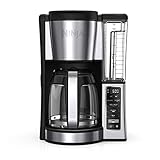
Ninja Fresh Brew Coffee Maker, 12 Cup Glass Carafe, Stainless Steel, CE251 | Programmable, Classic & Rich brew, 70-oz. Removable Water Reservoir, Small Batch, 24-hr Delay Brew, Adjustable Warming Plate | Check Price On Amazon |

|
Hamilton Beach 2-Way Programmable Coffee Maker & Single Serve Coffee Maker | 12 Cup Glass Carafe | Black with Stainless Steel Accents | 49980RG | Check Price On Amazon |

|
Keurig K-Elite Single Serve K-Cup Pod Coffee Maker, Brushed Slate | Strength and Temperature Control, Iced Coffee Capability, 8 to 12oz Brew Size, Programmable | Check Price On Amazon |

|
KRUPS Simply Brew Compact 5 Cup Coffee Maker: Stainless Steel Design, Pause & Brew, Keep Warm, Reusable Filter, Drip-Free Carafe | Check Price On Amazon |

|
Ninja® Luxe Café Premier 3-in-1 Espresso Machine, Stainless Steel, ES601 | Guided Barista Assist Technology for consistent results, dual froth system for hot or cold microfoam | Check Price On Amazon |
This brewing technique differs from pressure-based methods like espresso or immersion methods like French press. Drip coffee works through percolation, where water dissolves coffee compounds as it moves downward through the coffee bed, creating a filtering effect that produces clean, bright flavors.
The method encompasses both manual pour-over techniques and automatic drip coffee makers. Both approaches use the same fundamental principle of gravity-driven water flow through ground coffee, though they offer different levels of control over brewing parameters.
History and Origins of Drip Coffee
Drip coffee originated in early 19th century Europe when inventors sought alternatives to boiling coffee grounds directly in water. The first patent for a drip coffee maker appeared in France in 1819, designed by Morize.
The modern automatic drip coffee maker emerged in 1954 when Gottfried Minne invented the Wigomat in Germany. This innovation introduced electric heating elements and automated water distribution, making consistent drip brewing accessible to home users without manual pouring skills.
American adoption accelerated in the 1970s with Mr. Coffee’s mass marketing campaign. By 1975, drip coffee makers appeared in 42% of U.S. households, growing to 78% by 1985 according to the National Coffee Association.
Contemporary third-wave coffee culture has elevated manual drip methods, with pour-over techniques from Japan and precision brewing equipment gaining popularity among coffee enthusiasts seeking greater control over extraction variables.
How Does Drip Coffee Work?
Drip coffee extraction operates through controlled dissolution where heated water dissolves soluble compounds from ground coffee as it passes through the coffee bed. Water temperature between 195-205°F (90-96°C) provides optimal extraction rate without burning delicate aromatic compounds.
The brewing process consists of four distinct phases. Blooming occurs when hot water first contacts coffee grounds, releasing trapped CO2 gas and allowing even saturation. This initial 30-second phase uses twice the water weight as coffee grounds.
During the extraction phase, water dissolves acids, sugars, oils, and aromatic compounds from coffee particles. Contact time of 4-6 minutes allows complete extraction without over-extracting bitter compounds that dissolve later in the process.
Filtration happens as brewed coffee passes through paper or metal filters, removing particles and oils. Paper filters produce clean, bright flavors by removing most oils, while metal filters allow oils through for fuller body and richer mouthfeel.
What Equipment Do You Need for Drip Coffee?
Essential drip coffee equipment includes a brewing vessel, filter, burr grinder, scale, and kettle. Each component affects extraction quality and flavor consistency in the final cup.
A burr grinder produces uniform particle size distribution within ±50 microns compared to ±200+ microns for blade grinders. This consistency ensures even extraction across all coffee particles, preventing simultaneous over-extraction and under-extraction that creates muddy flavors.
Digital scales accurate to 0.1 grams enable precise coffee-to-water ratios. The standard starting ratio of 1:15 to 1:17 (coffee to water) requires exact measurements for repeatability and flavor optimization.
Manual Pour-Over Equipment
Hario V60, Chemex, and Kalita Wave represent the three primary pour-over designs, each creating different flow patterns and extraction profiles. V60’s conical shape and single drain hole produce faster flow rates and brighter acidity.
Chemex uses thick bonded filters and a wide opening for clean, tea-like body with pronounced clarity. The Kalita Wave’s flat bottom and three drain holes create more even saturation and consistent extraction timing.
Gooseneck kettles provide precise water flow control essential for even saturation. The narrow spout allows flow rates of 2-4 grams per second, preventing over-agitation that can cause channeling and uneven extraction.
Automatic Drip Coffee Makers
Certified automatic drip makers from the Specialty Coffee Association (SCA) maintain water temperature between 195-205°F and complete brewing in 4-6 minutes. Only 19 models currently hold SCA certification out of hundreds available.
Key features include pre-infusion cycles that wet grounds before main brewing, showerhead designs for even water distribution, and thermal carafes that maintain temperature without continued heating that degrades flavor.
High-end models like the Technivorm Moccamaster use copper heating elements and precise temperature control to replicate manual brewing consistency in an automatic format.
What Grind Size Works Best for Drip Coffee?
Medium grind size resembling coarse sand or breadcrumbs produces optimal extraction for most drip coffee methods. This particle size allows 4-6 minute contact time without clogging filters or creating channeling that leads to uneven extraction.
Grind size directly affects extraction rate through surface area exposure. Finer grinds increase extraction speed but risk over-extraction and clogging, while coarser grinds slow extraction and may cause under-extraction with sour, weak flavors.
Visual reference points help achieve consistency. Medium grind should feel slightly coarser than table salt but finer than kosher salt when rubbed between fingers. Particles should be relatively uniform without excessive fine dust or large chunks.
Adjusting Grind Size for Taste
If coffee tastes sour or weak, the grind is too coarse for complete extraction. Adjust one step finer and reduce brewing time by 15-30 seconds to maintain balance. Over-extracted coffee with bitter or harsh flavors indicates grind too fine.
Different pour-over methods require slight grind adjustments. V60 works best with medium-fine grind due to faster flow rates, while Chemex needs medium-coarse grind to prevent clogging thick filters that would over-extract.
Automatic drip makers typically require medium grind, though some high-end models with longer contact times perform better with medium-coarse settings. Testing 2-3 grind sizes helps identify optimal extraction for specific equipment.
What Water Temperature Should You Use?
Water temperature between 195-205°F (90-96°C) provides optimal extraction rate for drip coffee according to Specialty Coffee Association guidelines. This range dissolves desirable compounds without extracting excessive tannins and bitter elements that emerge at higher temperatures.
Temperature affects extraction speed exponentially. Each 10°F increase roughly doubles extraction rate, meaning water at 212°F extracts compounds twice as fast as 202°F water. This rapid extraction can overwhelm delicate flavors and create harsh, bitter notes.
Different roast levels respond to temperature variations differently. Light roasts benefit from the higher end of the range (200-205°F) to fully extract complex acids and aromatics. Dark roasts extract more readily and perform better at lower temperatures (195-200°F) to avoid over-extraction.
Measuring and Maintaining Temperature
Instant-read thermometers provide accurate temperature measurement, though electric kettles with temperature control offer greater convenience and consistency. Water temperature drops 5-10°F when poured, so starting 5-8°F higher compensates for heat loss.
Boiling water and waiting 30-45 seconds achieves approximately 200-205°F without a thermometer. Altitude affects boiling point, with water boiling at lower temperatures at higher elevations requiring shorter cooling times.
Preheating brewing equipment with hot water prevents temperature shock that can drop brewing temperature by 10-15°F. This step is particularly important for manual pour-over methods where heat retention matters throughout the 3-4 minute brew process.
How Long Should Drip Coffee Brew?
Total brew time of 4-6 minutes provides complete extraction for most drip coffee methods. This duration allows water to dissolve acids, sugars, and aromatics while avoiding over-extraction of bitter tannins and astringent compounds that emerge after 7-8 minutes.
Pour-over methods typically complete in 3:30-4:30 minutes including a 30-second bloom phase. Faster brew times under 3 minutes usually indicate grind too coarse or pouring too aggressively, resulting in under-extracted, sour coffee.
Automatic drip coffee makers should complete brewing in 5-6 minutes according to SCA certification standards. Machines that brew faster often use water temperatures too high to compensate, creating harsh flavors from rapid over-extraction.
Timing Different Brew Phases
The bloom phase uses 2-3 times coffee weight in water for 30-45 seconds, allowing CO2 degassing for even saturation. Fresh coffee produces vigorous blooming with visible bubbling, while older coffee shows minimal reaction.
Main pouring phases should maintain steady water levels without letting the coffee bed go dry. Intermittent pouring in 2-3 stages allows controlled agitation and even extraction across all grounds.
Final drip-through time indicates proper extraction. If coffee continues dripping more than 30 seconds after final pour, grind is likely too fine and creating excessive resistance to water flow.
What Is the Ideal Coffee-to-Water Ratio?
The golden ratio of 1:15 to 1:17 (coffee to water by weight) produces balanced strength for most palates. This translates to approximately 25-30 grams of coffee per 400-450 grams of water, or about 2 tablespoons of coffee per 6 ounces of water by volume.
Strength preference determines ratio selection within this range. Coffee-to-water ratios of 1:15 create fuller body and stronger flavor intensity, while 1:17 ratios produce lighter, more delicate cups with greater clarity.
Measuring by weight provides greater accuracy than volume measurements. Coffee density varies significantly between origins and roast levels, making volume measurements unreliable. A digital scale eliminates this variability and ensures consistent results.
Adjusting Ratios for Different Preferences
Stronger coffee requires more coffee grounds rather than longer extraction time, which leads to over-extraction. Ratios as concentrated as 1:12 work for those preferring bold flavors, though grind size may need slight adjustment to prevent over-extraction.
Weaker preferences can extend ratios to 1:20 while maintaining proper extraction by adjusting grind slightly finer. This approach preserves flavor balance while reducing overall intensity and caffeine content.
Different brewing methods require ratio modifications. Chemex performs well at 1:16-1:17 due to thick filters that create fuller extraction, while V60 often works better at 1:15-1:16 because of faster flow rates and shorter contact time.
What Does Drip Coffee Taste Like?
Drip coffee produces clean, bright flavors with good clarity that highlights origin characteristics and roasting profiles. Paper filtration removes most oils and fine particles, creating a lighter body than immersion methods while preserving acidity and aromatic compounds.
Flavor profiles vary significantly based on coffee origin, processing method, and roasting level. Light roasts showcase floral, fruity, or tea-like qualities with pronounced acidity, while medium roasts balance origin characteristics with caramelized sweetness from Maillard reactions.
The brewing method emphasizes clarity over richness compared to French press or espresso. This characteristic makes drip coffee excellent for appreciating subtle flavor notes and terroir expressions, particularly with high-quality single-origin coffees.
Flavor Development Through Extraction
Early extraction phases dissolve acids and aromatics that create brightness and complexity. These compounds extract within the first 2-3 minutes and provide the coffee’s signature flavor characteristics and origin identity.
Mid-extraction brings out sugars and balanced flavors that create sweetness and body. This phase occurs between minutes 3-5 and determines overall flavor harmony and drinking satisfaction.
Late extraction introduces bitter compounds and astringency that can overpower delicate flavors if allowed to proceed too long. Proper timing prevents these elements from dominating the cup while maintaining full flavor development.
How Does Drip Coffee Compare to Other Brewing Methods?
Drip coffee differs from espresso through pressure and concentration variables. Espresso uses 9 bars of pressure for 25-30 second extraction, creating concentrated flavors and thick crema, while drip coffee relies on gravity for 4-6 minutes producing lighter, more diluted results.
Compared to French press immersion brewing, drip coffee offers cleaner flavors with less body due to paper filtration removing oils and sediment. French press creates fuller mouthfeel and richer texture but can mask subtle flavor notes that drip methods highlight.
Cold brew uses extended 12-24 hour extraction at room temperature, producing low-acid, smooth flavors with chocolate and nutty notes. Drip coffee’s hot extraction emphasizes acidity and bright flavors that cold brewing cannot achieve.
Drip vs Pour-Over Techniques
Automatic drip makers provide consistency and convenience but offer limited control over variables like pour rate, agitation, and timing. Manual pour-over methods allow precise manipulation of these factors for customized extraction profiles.
Pour-over techniques enable bloom control, pulse pouring, and real-time adjustments based on coffee response. This control particularly benefits light roasts and complex single-origin coffees that reward careful attention to extraction details.
Equipment investment differs significantly between approaches. Quality automatic drip makers cost $150-400, while pour-over setups require $50-150 but demand more time and skill development for consistent results.
What Are the Pros and Cons of Drip Coffee?
Drip coffee advantages include consistent results, easy scalability for multiple cups, and relatively simple technique requirements. The method produces clean flavors that showcase coffee quality and origin characteristics without requiring extensive training or specialized skills.
Convenience ranks as the primary benefit for automatic drip makers. Users can prepare coffee with minimal hands-on time, making it practical for busy mornings or office environments where consistency matters more than customization.
Cost effectiveness makes drip coffee accessible to most budgets. Basic equipment costs $30-100, and the method works well with medium-grade coffee that costs less than premium beans required for advanced brewing techniques.
Limitations and Drawbacks
Limited control over extraction variables represents the main disadvantage of automatic drip systems. Users cannot adjust pour rate, water distribution, or timing mid-brew, preventing optimization for different coffees or personal preferences.
Paper filter costs add ongoing expenses, averaging $0.05-0.15 per cup depending on filter quality and brewing volume. Metal filters eliminate this cost but allow oils and fines through, changing flavor profiles significantly.
Temperature maintenance challenges affect quality in automatic makers without thermal carafes. Hot plates continue cooking coffee after brewing, creating bitter, burnt flavors within 15-20 minutes that degrade the drinking experience.
Who Should Choose Drip Coffee?
Beginner coffee drinkers benefit from drip coffee’s forgiving nature and consistent results. The method tolerates minor variations in technique while producing reliably good coffee, making it ideal for those developing their palate and brewing skills.
Households brewing multiple cups simultaneously find drip coffee practical and efficient. Most drip makers brew 4-12 cups at once, serving families or offices better than single-cup methods that require individual preparation.
Coffee drinkers who prioritize convenience over customization prefer automatic drip makers for their hands-off operation. Learning how to make coffee with drip methods requires minimal daily effort once equipment is set up properly.
Professional and Commercial Applications
Office environments rely on drip coffee for its ability to produce large quantities with minimal supervision. Commercial batch brewers can produce 3-5 gallons per cycle, serving dozens of people with consistent quality.
Restaurants and cafes use drip coffee as a cost-effective option alongside espresso-based drinks. The method allows staff to serve regular coffee quickly without tying up espresso machines or requiring specialized barista skills.
Catering operations depend on drip coffee’s scalability and holding capability. Large thermal brewers can maintain serving temperature for 2-3 hours without significant quality degradation, essential for events and meetings.
What Equipment Do Experts Recommend?
The Technivorm Moccamaster receives consistent recommendations from coffee professionals for its SCA certification, copper heating elements, and 5-year warranty. This Dutch-made machine maintains precise temperature control and even water distribution for $320-400.
For pour-over enthusiasts, the Hario V60 ceramic dripper ($25-35) paired with matching filters provides excellent value and versatility. The conical design and spiral ridges promote even extraction with proper pouring technique.
Grinder selection significantly impacts result quality regardless of brewing method. The Baratza Encore burr grinder ($140-160) offers consistent particle size distribution and easy calibration for home users wanting professional-level grinding capability.
Budget-Friendly Alternatives
The Bonavita Connoisseur provides SCA certification at $120-150, featuring pre-infusion, flat-bottom basket, and thermal carafe. Performance matches more expensive models while remaining accessible to budget-conscious buyers.
Manual pour-over options like the Melitta Pour-Over ($15-25) deliver excellent results with proper technique. The flat-bottom design forgives minor pouring inconsistencies while producing clean, balanced extraction.
Hand grinders like the Hario Mini Mill ($35-45) provide burr grinding capability at entry-level prices. While requiring manual effort, they produce particle consistency superior to blade grinders for fraction of electric burr grinder costs.
How Difficult Is Drip Coffee to Master?
Drip coffee offers a gentle learning curve with immediate acceptable results and gradual improvement potential. Basic competency requires understanding four variables: grind size, water temperature, coffee-to-water ratio, and timing. Most people achieve consistent results within 5-10 brewing sessions.
Automatic drip makers reduce skill requirements to coffee selection, grinding consistency, and ratio measurement. Once equipment is properly set up, daily operation involves minimal decision-making or technique adjustment.
Manual pour-over methods require more skill development but reward practice with superior control and customization. Achieving consistent pour rates, timing, and water distribution typically takes 3-4 weeks of regular practice for most users.
Skill Development Timeline
Week 1-2 focuses on basic ratio and grind size establishment. Users learn to measure coffee and water accurately while identifying over-extraction and under-extraction taste characteristics through trial and adjustment.
Week 3-4 introduces timing control and pouring technique for manual methods. Students develop muscle memory for consistent pour rates and learn to maintain steady water levels throughout the brewing process.
Month 2-3 enables fine-tuning for different coffee origins and personal preferences. Advanced practitioners can adjust multiple variables simultaneously to optimize extraction for specific beans and desired flavor profiles.
What Are Common Drip Coffee Mistakes?
Using incorrect coffee-to-water ratios creates the most frequent problems in drip brewing. Too little coffee produces weak, sour extraction while too much coffee can overwhelm filters and create muddy, over-extracted flavors even with proper timing.
Water temperature errors significantly impact extraction quality. Boiling water (212°F) burns delicate aromatics and extracts excessive bitterness, while water below 190°F fails to extract acids and sugars completely, resulting in flat, lifeless coffee.
Stale coffee beans produce disappointing results regardless of technique quality. Coffee loses optimal flavor within 2-4 weeks of roasting, with pre-ground coffee degrading within days due to increased surface area exposure to oxygen.
Equipment and Technique Errors
Dirty equipment introduces rancid oils and bitter flavors that contaminate fresh coffee. Coffee cleaning tablets should be used weekly for automatic makers, while manual equipment needs thorough rinsing after each use.
Inconsistent grind size from dull burrs or poor-quality grinders creates uneven extraction with simultaneous over-extraction and under-extraction. Blade grinders produce particle size variation exceeding ±200 microns, making consistent extraction impossible.
Pour-over timing mistakes include pouring too quickly, skipping the bloom phase, or letting the coffee bed go completely dry between pours. These errors cause channeling, uneven saturation, and inconsistent extraction throughout the coffee bed.
What Tips Ensure the Best Drip Coffee Results?
Use high-quality water with 150-300 ppm total dissolved solids for optimal extraction. Hard water over 300 ppm over-extracts and creates harsh flavors, while soft water under 75 ppm under-extracts and produces flat, lifeless coffee lacking body and sweetness.
Grind coffee immediately before brewing to preserve volatile aromatics and prevent oxidation. Pre-ground coffee loses 60% of its aromatic compounds within 15 minutes of grinding according to coffee science research from UC Davis.
Maintain consistent water temperature throughout the brewing process by preheating equipment and using thermal carafes instead of hot plates. Temperature fluctuations greater than ±5°F create uneven extraction and inconsistent flavor development.
Advanced Optimization Techniques
Bloom coffee with twice its weight in water for 30-45 seconds to ensure even saturation and CO2 degassing. Fresh coffee produces vigorous bubbling during blooming, indicating proper degassing for uniform extraction.
Pulse pouring in 2-3 stages maintains consistent water levels and prevents over-agitation that can cause channeling. Each pour should maintain water level 1-2 inches above the coffee bed without overflowing the brewing vessel.
Clean equipment weekly with specialized coffee cleaning solutions to remove mineral buildup and rancid oil residue. Scale buildup reduces heating efficiency and creates off-flavors, while oil residue adds bitter, stale notes to fresh coffee.
What Are Popular Drip Coffee Variations?
Pour-over methods represent the most popular manual drip variations, each offering distinct characteristics through design differences. The Chemex produces clean, bright flavors through thick bonded filters, while the V60 emphasizes origin characteristics through faster flow rates and minimal filtration interference.
Cold drip coffee uses room temperature water dripped slowly over 3-12 hours, creating smooth, low-acid concentrate with chocolate and nutty flavors. This method differs from cold brew immersion by using gravity flow, producing cleaner flavors with less sediment.
Batch brew systems in specialty cafes use precise temperature and timing control to produce consistent drip coffee at commercial scale. These systems often feature pre-infusion cycles and multiple spray heads for even saturation across large coffee beds.
Regional and Cultural Variations
Japanese kissaten coffee culture emphasizes meticulous pour-over technique with precise timing, temperature, and pouring patterns passed down through generations. This approach treats coffee brewing as a meditative practice requiring years of skill development.
Scandinavian coffee culture favors light roasts brewed with longer extraction times and higher ratios, producing bright, acidic flavors that highlight coffee origin characteristics. This approach influenced modern third-wave coffee movements worldwide.
American automatic drip coffee culture prioritized convenience and large serving sizes, leading to the development of programmable machines and thermal carafes that maintain coffee quality for extended periods without continued heating.
What Is the Cultural Significance of Drip Coffee?
Drip coffee represents American coffee culture’s emphasis on convenience, consistency, and accessibility. The automatic drip maker became a standard household appliance by the 1980s, symbolizing efficiency and democratic access to quality coffee without specialized knowledge.
Office coffee culture relies heavily on drip brewing for its ability to serve multiple people simultaneously. The shared coffee maker became a social focal point where workplace relationships develop through casual morning interactions and coffee break conversations.
Third-wave coffee culture elevated manual drip methods from utilitarian brewing to artisanal craft. Pour-over techniques became symbols of coffee expertise and quality consciousness, representing the movement toward treating coffee as a specialty beverage rather than commodity product.
Global Influence and Adoption
American-style drip coffee makers spread globally through cultural influence and convenience benefits. Countries with strong traditional coffee cultures like Italy and Turkey adopted drip methods alongside espresso and Turkish coffee for different occasions and preferences.
Japanese coffee culture refined drip techniques into precise, ritualistic practices that influenced international specialty coffee standards. Japanese attention to detail in timing, temperature, and technique set benchmarks for pour-over quality worldwide.
Modern coffee shop culture incorporates both automatic batch brew and manual pour-over options to serve different customer preferences. This dual approach acknowledges drip coffee’s role in both everyday consumption and specialty coffee appreciation.
Frequently Asked Questions About Drip Coffee
Is drip coffee stronger than espresso?
Drip coffee contains less caffeine per ounce than espresso but more caffeine per serving. A typical 8-ounce drip coffee contains 95-165mg caffeine while a 1-ounce espresso shot contains 63-75mg. Drip coffee tastes less intense due to dilution but provides more total caffeine intake per cup.
How long does drip coffee stay fresh after brewing?
Drip coffee maintains optimal flavor for 15-20 minutes after brewing when kept at serving temperature. Coffee held on hot plates develops bitter, burnt flavors within 30 minutes due to continued heating. Thermal carafes preserve quality for 2-3 hours without additional heat source.
Can you use espresso beans for drip coffee?
Espresso beans work for drip coffee but may produce darker, more bitter flavors than beans roasted specifically for drip brewing. Espresso roasts are typically darker to withstand pressure extraction, creating more pronounced roasted flavors that can overwhelm the clean characteristics drip brewing highlights.
Why does my drip coffee taste bitter?
Bitter drip coffee indicates over-extraction from water too hot (above 205°F), grind too fine, brewing time too long, or coffee-to-water ratio too high. Adjust one variable at a time: try coarser grind first, then lower temperature by 5°F, then reduce brewing time by 30 seconds.
What’s the difference between drip coffee and pour-over?
Pour-over is a manual subset of drip coffee that allows precise control over water flow, timing, and agitation. Automatic drip makers use mechanical water distribution while pour-over requires hand-pouring in controlled patterns. Both use gravity-based extraction through similar principles.
How much coffee should I use for one cup?
Use 15-20 grams of coffee per 250-300 grams of water for one cup, following the 1:15 to 1:17 ratio guideline. This translates to approximately 2-3 tablespoons of ground coffee per 8-10 ounces of water, adjustable based on strength preference and coffee quality.
Can I reuse coffee grounds for a second brew?
Reusing coffee grounds produces weak, over-extracted coffee with minimal desirable flavors remaining. First extraction removes 18-22% of soluble compounds including acids, sugars, and aromatics. Second brewing extracts primarily bitter tannins and astringent compounds without balanced flavor development.
What type of filter is best for drip coffee?
Paper filters produce cleaner, brighter flavors by removing oils and fine particles, while metal filters allow oils through for fuller body but may include sediment. Bleached paper filters require rinsing to remove papery taste, while unbleached filters add minimal flavor but need thorough rinsing.
Why is my drip coffee sour or weak?
Sour or weak coffee indicates under-extraction from grind too coarse, water too cool (below 195°F), brewing time too short, or insufficient coffee grounds. Increase extraction by using finer grind, hotter water, longer contact time, or higher coffee-to-water ratio.
How do I clean my drip coffee maker?
Clean automatic drip makers monthly with white vinegar solution (1:1 vinegar to water) run through complete brew cycle, followed by 2-3 cycles of plain water to remove residue. Daily cleaning requires rinsing carafe, filter basket, and water reservoir with warm soapy water.
Can I make cold brew with drip coffee method?
Traditional cold drip uses room temperature water dripped slowly over coffee grounds for 3-12 hours, different from cold brew immersion. Cold drip produces cleaner, brighter flavors than immersion cold brew but requires specialized equipment with adjustable drip rates.
What’s the best water temperature for light roast drip coffee?
Light roasts extract optimally at 200-205°F due to denser bean structure and higher acidity levels requiring more aggressive extraction. This higher temperature range fully develops complex acids and aromatic compounds while avoiding under-extraction that creates overly sour, weak flavors.
How do I fix channeling in pour-over drip coffee?
Prevent channeling by ensuring even saturation during bloom phase, maintaining consistent pour rates, and avoiding disturbing coffee bed walls during pouring. Use circular pouring patterns starting from center and spiraling outward, keeping water level steady without letting bed go dry.
Why does restaurant drip coffee taste different than homemade?
Restaurant drip coffee often uses commercial brewing systems with precise temperature control, industrial grinders producing consistent particle size, and optimized coffee blends designed for drip brewing. Many establishments also use higher coffee-to-water ratios and specialized commercial coffee beans formulated for batch brewing.
How long should I let drip coffee bloom?
Bloom drip coffee for 30-45 seconds using twice the coffee’s weight in water to allow CO2 degassing and ensure even saturation. Fresh coffee produces vigorous bubbling during blooming, while older coffee shows minimal reaction. Proper blooming prevents channeling and promotes uniform extraction across all grounds.
Drip coffee offers an accessible entry point into quality coffee brewing while providing room for skill development and customization. The method’s balance of convenience and control makes it suitable for both beginners seeking consistent results and enthusiasts wanting to explore brewing variables. Success depends on understanding the relationship between grind size, water temperature, timing, and ratios rather than expensive equipment. Whether using an automatic drip maker for daily convenience or mastering pour-over techniques for weekend experimentation, drip brewing rewards attention to detail with clean, flavorful coffee that showcases bean quality and personal preferences.