
Espresso roast produces the deep, bold flavors essential for authentic espresso shots through extended roasting that develops oils and caramelizes sugars. This roasting level creates the low acidity and full body that cuts through milk in lattes and cappuccinos while providing the intensity espresso lovers expect. Understanding espresso roast methodology helps you recognize quality beans and achieve consistent brewing results that match professional café standards.
What Makes Espresso Roast Essential for Better Coffee?
Espresso roast undergoes extended heat exposure that fundamentally transforms coffee bean structure, creating the characteristics espresso brewing demands. The roasting process reaches 435-445°F internal bean temperature, causing cell walls to break down and oils to migrate to the surface. This oil development enables proper crema formation during espresso machine extraction.
| Photo | Popular Coffee Makers | Price |
|---|---|---|
|
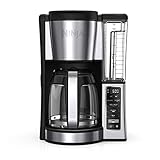
Ninja Fresh Brew Coffee Maker, 12 Cup Glass Carafe, Stainless Steel, CE251 | Programmable, Classic & Rich brew, 70-oz. Removable Water Reservoir, Small Batch, 24-hr Delay Brew, Adjustable Warming Plate | Check Price On Amazon |

|
Hamilton Beach 2-Way Programmable Coffee Maker & Single Serve Coffee Maker | 12 Cup Glass Carafe | Black with Stainless Steel Accents | 49980RG | Check Price On Amazon |

|
Keurig K-Elite Single Serve K-Cup Pod Coffee Maker, Brushed Slate | Strength and Temperature Control, Iced Coffee Capability, 8 to 12oz Brew Size, Programmable | Check Price On Amazon |

|
KRUPS Simply Brew Compact 5 Cup Coffee Maker: Stainless Steel Design, Pause & Brew, Keep Warm, Reusable Filter, Drip-Free Carafe | Check Price On Amazon |

|
Ninja Luxe Café Premier 3-in-1 Espresso Machine, Drip Coffee, & Cold Brew | Built-in Grinder, Hands-Free Milk Frother, and Assisted Tamper for Cappuccinos & Lattes, Stainless Steel, ES601 | Check Price On Amazon |
The extended roasting time of 12-15 minutes develops Maillard reactions that create over 800 flavor compounds responsible for chocolate, caramel, and nutty notes. According to Specialty Coffee Association research, espresso roast beans contain 40% more soluble compounds than light roasts, enabling the 18-22% extraction yield required for balanced espresso. This solubility allows 9 bars of pressure to extract concentrated flavors in 25-30 seconds without over-extraction bitterness.
Unlike lighter roasting levels that preserve origin characteristics, espresso roast emphasizes roast-developed flavors that complement milk-based drinks. The low acidity and full body created during this roasting process provides the foundation strength needed to maintain coffee flavor when combined with steamed milk in traditional Italian espresso preparations.
How Espresso Roast Development Differs from Other Coffee Roasting Methods
Espresso roast extends significantly beyond second crack, reaching internal temperatures that lighter roasts never achieve. While medium roasts stop around 410°F, espresso roast continues to 435-445°F internal bean temperature, allowing oils to develop fully on the bean surface. This temperature difference creates the visual distinction of shiny, oil-coated beans versus the dry appearance of lighter roasts.
The time-temperature profile differs dramatically from other roasting approaches. Light roast development occurs in 8-10 minutes with rapid temperature rise, while espresso roast requires 12-15 minutes with controlled heat application after second crack. Professional roasters maintain 2-3°F per minute temperature rise during development to prevent burning while achieving full oil development.
Airflow management during espresso roasting reduces significantly compared to light roast profiles. Lower airflow allows heat retention necessary for oil development, while higher airflow used in light roasting preserves origin acidity. This creates the fundamental difference in flavor outcomes between various coffee roasting levels, with espresso roast prioritizing body and intensity over origin expression.
Temperature Control Precision During Espresso Development
Espresso roast requires precise temperature management to avoid carbonization while achieving complete oil development. Professional roasters monitor bean temperature every 30 seconds, maintaining 2-3°F per minute rise after second crack begins. This slow development phase prevents surface burning while allowing internal chemical reactions to complete fully.
Heat application decreases by 20-30% during the final 3-4 minutes to prevent scorching. Temperature monitoring equipment becomes critical during this phase, as 10°F temperature variation can create burnt flavors or incomplete development. Many commercial roasters use multiple probe thermometers to verify uniform heat distribution throughout the batch.
Airflow Adjustments for Oil Development
Proper airflow control enables oil migration to bean surfaces without creating uneven roasting. Airflow reduces to 60-70% of initial levels during development phase, allowing heat retention necessary for oil development. Too much airflow during this critical period prevents oils from reaching bean surfaces, resulting in espresso that lacks proper crema formation.
Professional roasters adjust airflow based on batch size and ambient humidity. Smaller batches require less airflow reduction, while larger batches need more significant adjustments to maintain even heat distribution. This airflow management directly impacts the final cup quality and extraction characteristics of the finished espresso roast.
Essential Equipment for Home Espresso Roasting Success
Home espresso roasting requires specific equipment designed to handle the extended roasting times and oil development phases. Drum roasters provide the most consistent results for espresso profiles, offering precise temperature control and even heat distribution necessary for proper development. Hot air roasters can achieve espresso roast but require careful airflow management to prevent uneven development.
Temperature monitoring becomes critical for home espresso roasting success. Digital thermometers with 1°F accuracy enable precise tracking of development phases, while coffee scales ensure consistent batch sizes for repeatable results. Many home roasters invest in data logging systems to track successful roasting profiles for future batches.
Cooling equipment prevents over-roasting after desired development completes. Immediate cooling within 2-3 minutes stops the roasting process and prevents continued development that creates burnt flavors. Professional cooling trays with airflow systems work best, though home roasters achieve good results with mesh colanders and fans.
Roaster Selection for Espresso Development
Drum roasters excel at espresso roast development due to conductive heat transfer that promotes even oil development. Models with 1-5 pound capacity provide optimal batch sizes for consistent home roasting, while maintaining heat retention necessary for extended development phases. Electric drum roasters offer more precise temperature control than gas models for beginning home roasters.
Fluid bed roasters require modifications for successful espresso roasting. Standard airflow settings prevent oil development, requiring manual adjustments during the final roasting phases. Some home roasters modify their machines with variable airflow controls, though this requires technical expertise and voids manufacturer warranties.
Temperature Monitoring and Data Collection
Accurate temperature measurement enables consistent espresso roast development. Type K thermocouples provide 1°F accuracy necessary for tracking subtle development phases, while data logging software records successful profiles for replication. Many serious home roasters invest in systems that graph temperature curves and roast progression rates.
Multiple temperature probes verify even heat distribution throughout the roasting chamber. Bean temperature probes track development progress, while environmental temperature probes monitor roaster performance consistency. This data collection allows home roasters to develop signature espresso profiles that match their taste preferences.
Step-by-Step Espresso Roasting Process for Consistent Results
Successful espresso roasting follows a precise sequence that builds flavor compounds while developing surface oils essential for crema formation. The process requires 12-15 minutes total time with careful monitoring during each development phase. Professional roasters follow standardized protocols to ensure consistency across batches and maintain quality standards.
| Phase | Time | Temperature | Action | Expected Result |
|——-|——|————-|——–|—————–|
| Drying | 0-4 min | 200-300°F | High heat, full airflow | Moisture removal, color change to yellow |
| Maillard | 4-8 min | 300-385°F | Moderate heat, reduced airflow | Browning reactions, nutty aromas |
| Development | 8-12 min | 385-445°F | Low heat, minimal airflow | Oil development, second crack completion |
| Cooling | 12-15 min | 445°F to ambient | No heat, maximum airflow | Process stoppage, oil stabilization |
Pre-Roast Preparation and Bean Selection
Quality espresso roasting begins with proper green bean selection and preparation. Choose beans with 10-12% moisture content for optimal development, as higher moisture prevents proper oil development while lower moisture creates uneven roasting. Store green beans in cool, dry conditions for 24-48 hours before roasting to stabilize moisture levels.
Preheat the roasting chamber to 390-400°F before adding beans to ensure immediate heat transfer. This preheating prevents stalling during initial phases and promotes even development throughout the batch. Clean the roasting chamber thoroughly between batches to prevent flavor contamination from previous roasts.
Monitoring First and Second Crack Timing
First crack typically occurs at 385-390°F after 6-7 minutes of roasting time. This audible popping indicates cell structure breakdown and marks the transition to flavor development phases. Monitor crack intensity and frequency to gauge roasting progression, with rapid, loud cracks indicating proper heat distribution.
Second crack begins 2-3 minutes after first crack completion, producing quieter popping sounds at 410-415°F. Espresso roast continues 3-4 minutes beyond second crack onset to achieve full oil development. The timing between first and second crack indicates proper heat application, with 2-3 minute intervals showing optimal roasting conditions.
Final Development and Oil Formation
The critical development phase occurs after second crack, requiring reduced heat input to prevent scorching while allowing oil migration to bean surfaces. Monitor surface oil appearance, which begins as slight sheen and develops into visible droplets. This oil development typically requires 3-4 minutes of careful temperature management.
Complete development shows uniform surface oil across all beans with rich, dark brown coloration. Beans should appear slightly swollen from internal gas development, indicating proper cell structure breakdown. The finished roast produces strong, roasted aromas with chocolate and caramel notes dominating over origin characteristics.
Temperature and Time Variables That Impact Espresso Flavor
Precise temperature control during espresso roasting determines final flavor characteristics and extraction properties. Development temperature directly affects solubility levels, with higher temperatures creating more soluble compounds that extract readily during brewing. According to Coffee Science Foundation research, temperature variations of 10°F during development create 15-20% differences in extraction yield.
Roasting time influences flavor balance between sweetness, bitterness, and body development. Shorter development times at higher temperatures create brighter acidity with less body, while extended development at moderate temperatures produces fuller body with reduced acidity. Professional roasters typically use 12-15 minute total roast time with 4-5 minute development phase for balanced espresso characteristics.
The rate of temperature rise affects chemical reaction completion and flavor compound development. Optimal rise rates of 2-3°F per minute during development allow Maillard reactions to complete fully while preventing carbonization. Faster temperature rises create underdeveloped interiors with burnt exteriors, while slower rises may not achieve sufficient oil development for proper espresso extraction.
Heat Application Strategies for Flavor Development
Initial high heat input during drying phase removes moisture efficiently without creating flavor defects. Apply maximum heat for the first 4-5 minutes until color change begins, then reduce heat by 30-40% for Maillard phase development. This heat reduction allows browning reactions to occur without creating burnt flavors that dominate the final cup.
Development phase heat application requires the most precise control to achieve proper oil formation. Reduce heat input to 20-30% of maximum during this critical 3-4 minute period while maintaining 2-3°F per minute temperature rise. This low heat input prevents surface carbonization while allowing internal oils to migrate to bean surfaces.
Time Management for Optimal Extraction Properties
Total roast time directly impacts bean density and extraction characteristics in the final espresso. Shorter roasts of 10-12 minutes create denser beans that require higher brewing pressure for proper extraction, while longer roasts of 14-16 minutes produce more porous beans that extract more readily at standard 9 bar pressure.
Development time specifically affects soluble compound formation that determines espresso strength and crema quality. Minimum 3-minute development creates adequate solubility for proper extraction, while 5+ minute development may create over-extraction tendencies and bitter flavors. Most commercial espresso roasters target 3.5-4 minute development for optimal balance.
Quality Indicators for Perfect Espresso Roast Results
Visual assessment provides the most immediate quality indicators for espresso roast success. Properly developed beans show uniform dark brown coloration with visible surface oils distributed evenly across all beans. Color consistency within 1-2 shade variations indicates even heat distribution, while wider color ranges suggest temperature control problems during roasting.
Surface oil development serves as the primary indicator of complete espresso roast development. Fresh espresso roast shows slight oil sheen immediately after cooling, developing into visible droplets within 12-24 hours of roasting. Excessive oil indicates over-roasting and potential burnt flavors, while absent surface oil suggests incomplete development that lacks proper extraction characteristics.
Aroma evaluation confirms successful flavor development during the roasting process. Quality espresso roast produces intense chocolate, caramel, and nutty aromas with minimal origin characteristics. Sharp, acrid smells indicate over-roasting and carbonization, while grassy or sour aromas suggest under-development that requires extended roasting time.
Physical Bean Characteristics Assessment
Bean expansion during roasting indicates proper heat penetration and gas development within the coffee structure. Espresso roast beans typically expand 60-80% from green bean size, creating the porous structure necessary for proper extraction. Under-developed beans show minimal expansion and dense structure that resists water penetration during brewing.
Weight loss measurement provides objective quality assessment for roasting consistency. Espresso roast typically loses 16-18% of green bean weight through moisture and organic matter loss during roasting. Consistent weight loss percentages between batches indicate reproducible roasting conditions and quality control.
Grind and Extraction Testing
Grind behavior reveals internal bean structure development that affects espresso extraction characteristics. Properly developed espresso roast grinds uniformly with minimal dust production, indicating even cell structure breakdown. Under-developed beans create uneven grinding with hard particles that resist uniform extraction.
Extraction testing confirms roast development success through brewing performance evaluation. Quality espresso roast achieves 18-22% extraction yield in 25-30 seconds using standard brewing parameters. Lower extraction yields indicate insufficient development, while higher yields may suggest over-roasting that creates excessive solubility.
Home vs Commercial Espresso Roasting: Key Differences
Commercial espresso roasting operations achieve consistency through automated systems that control temperature, airflow, and timing with precision unattainable in home setups. Professional roasters process 25-500 pound batches using computer-controlled profiles that maintain ±2°F temperature accuracy throughout the roasting cycle. This consistency enables commercial roasters to produce identical flavor profiles across multiple batches and maintain brand standards.
Home espresso roasting requires manual monitoring and adjustment throughout the roasting process, creating natural variation between batches. Home roasters typically work with 1-5 pound batches that heat more quickly and require faster decision-making during critical development phases. This hands-on approach allows more experimentation but requires extensive practice to achieve commercial-level consistency.
Equipment capabilities create fundamental differences in roasting potential between home and commercial operations. Commercial drum roasters maintain thermal mass that provides stable heat transfer, while home roasters often struggle with temperature fluctuations during longer development phases. Commercial roasters also feature advanced cooling systems that stop the roasting process immediately, while home cooling methods may allow continued development that affects final flavor profiles.
Batch Size Impact on Development Control
Large commercial batches of 50-200 pounds create thermal momentum that stabilizes temperature throughout development phases. This thermal mass prevents rapid temperature changes and allows gradual heat adjustments during critical development periods. Commercial roasters leverage this stability to achieve precise oil development without scorching risks.
Small home batches of 1-5 pounds heat and cool rapidly, requiring constant attention during development phases. The low thermal mass means temperature changes occur within seconds rather than minutes, making precise control more challenging but allowing quick corrections when problems develop. Home roasters must develop faster reflexes and decision-making skills to compensate for reduced thermal stability.
Quality Control and Consistency Measures
Commercial operations employ standardized protocols including sample roasting, cupping evaluation, and colorimeter measurements to ensure consistent quality. Professional roasters test each batch against established standards before packaging, rejecting batches that don’t meet specifications. This quality control system maintains consistent customer experience across all retail locations.
Home roasters rely on sensory evaluation and brewing performance to assess roast quality, developing personal standards through experience and practice. While less quantified than commercial methods, experienced home roasters achieve excellent consistency by maintaining detailed roasting logs and tracking successful profiles. Many serious home roasters develop cupping skills that rival professional standards.
Common Espresso Roasting Techniques and Regional Variations
Italian espresso roasting tradition emphasizes extended development times that create the dark, oily beans associated with authentic espresso flavor profiles. Traditional Italian roasters extend development 4-5 minutes beyond second crack, achieving internal temperatures of 440-450°F that produce significant surface oil development. This approach prioritizes body and intensity over origin characteristics, creating the bold flavors that define traditional Italian espresso.
Northern European espresso roasting techniques balance development with origin preservation, stopping development earlier to maintain some bean origin characteristics while achieving espresso-appropriate body and extraction properties. Scandinavian roasters typically limit development to 2-3 minutes beyond second crack, reaching 430-435°F internal temperatures. This lighter approach within espresso roasting creates more complex flavor profiles while maintaining milk drink compatibility.
American third-wave espresso roasting emphasizes precise profiling that highlights specific flavor attributes while maintaining espresso functionality. These roasters use advanced profiling software to control heat application curves, creating customized development patterns for different origin characteristics. The goal focuses on achieving espresso extraction properties while preserving desirable origin flavors that complement modern café culture.
Traditional Italian Development Methods
Classic Italian espresso development uses steady heat application throughout the roasting cycle, maintaining consistent energy input until final development completes. This approach creates uniform heat penetration that develops oils evenly throughout the bean structure. Italian roasters prioritize full development over complexity, seeking the bold, predictable flavors that work reliably in traditional milk-based drinks.
Temperature management in Italian roasting maintains higher heat levels during development phases compared to modern techniques. Traditional roasters apply heat steadily through second crack and beyond, reaching finish temperatures of 445-450°F. This extended heat exposure creates the characteristic dark, oily appearance and intense flavors associated with authentic Italian espresso.
Modern Precision Roasting Approaches
Contemporary espresso roasting uses variable heat application throughout the roasting cycle, adjusting energy input based on bean response and desired flavor outcomes. Modern roasters increase heat during Maillard reactions to develop sweetness, then reduce heat during development to prevent over-roasting while achieving necessary oil development. This precision creates more nuanced flavor profiles within espresso roasting parameters.
Data-driven roasting techniques employ sensors and software to track bean temperature, environmental conditions, and roasting progression in real-time. Roasters use this information to make micro-adjustments during roasting, optimizing flavor development while maintaining consistency. These techniques produce more complex espresso profiles that highlight both roast development and origin characteristics.
Troubleshooting Common Espresso Roasting Problems
Under-development represents the most common espresso roasting problem, resulting from insufficient time or temperature during the critical development phase. Beans showing under-development lack surface oil formation and appear lighter than proper espresso roast coloration. These beans extract poorly during brewing, producing weak espresso with insufficient crema formation and thin body that disappears when milk is added.
Over-roasting creates carbonized flavors that dominate the espresso cup with harsh, burnt characteristics. Over-roasted beans show excessive surface oil with dark, sometimes black coloration and brittle texture that creates excessive dust during grinding. According to professional roasting standards, over-roasted espresso produces bitter extraction that cannot be balanced through brewing adjustments.
Uneven development occurs when heat distribution problems create color and development variations within the same batch. This inconsistency results from inadequate mixing, temperature control issues, or improper heat application during critical development phases. Uneven batches produce unpredictable extraction characteristics that make consistent espresso brewing impossible.
Identifying and Correcting Development Issues
Under-developed espresso roast appears dry with minimal surface sheen and lighter coloration than properly developed beans. These beans grind with significant effort and produce sour, under-extracted espresso regardless of brewing parameter adjustments. Correction requires extending development time by 1-2 minutes while maintaining proper temperature control to achieve adequate oil formation.
Proper development correction involves monitoring bean expansion and surface oil appearance rather than relying solely on time or temperature. Well-developed beans show 70-80% expansion from green bean size with visible oil sheen developing within 12-24 hours after roasting. Visual cues provide more reliable development indicators than fixed time schedules.
Heat Control and Temperature Management Solutions
Temperature fluctuations during development create uneven roasting that produces inconsistent extraction characteristics. Install additional temperature monitoring equipment to track both bean and environmental temperatures throughout the roasting cycle. Maintain 2-3°F per minute temperature rise during development, adjusting heat input gradually to prevent sudden temperature changes.
Inadequate cooling allows continued development after roasting completion, resulting in over-development and potential burnt flavors. Implement immediate cooling within 2-3 minutes of roast completion using high-airflow cooling systems. Beans should reach ambient temperature quickly to stop chemical reactions and preserve intended flavor development.
Innovations in Espresso Roasting Technology
Modern roasting technology incorporates advanced sensors and automation systems that enable precise control over espresso development phases. Computer-controlled roasters monitor bean temperature, moisture content, and color development in real-time, making automatic adjustments to maintain consistent profiles. These systems achieve temperature accuracy within ±1°F throughout the roasting cycle, producing unprecedented consistency in espresso roast development.
Infrared roasting technology provides more uniform heat distribution compared to traditional drum or hot air methods. Infrared systems penetrate bean structure evenly, reducing development time while achieving complete oil formation necessary for espresso extraction. This technology enables faster roasting cycles with improved flavor development and reduced energy consumption.
Artificial intelligence systems analyze roasting data to optimize profiles for specific flavor outcomes and bean characteristics. These AI systems learn from thousands of roasting cycles to predict optimal development parameters for different green coffee origins and desired flavor profiles. Professional roasters use these insights to develop signature espresso blends with consistent quality and unique flavor characteristics.
Automated Profile Control Systems
Smart roasting systems use multiple sensors to track roasting progression and automatically adjust heat, airflow, and timing to maintain predetermined profiles. These systems compensate for environmental variables like humidity and ambient temperature that traditionally affect roasting outcomes. Automated control enables consistent espresso roast development regardless of external conditions.
Machine learning algorithms analyze successful roasting data to improve profile recommendations and predict optimal development parameters. These systems identify patterns in temperature curves, timing, and bean response that produce superior espresso characteristics. Professional roasters leverage these insights to refine their techniques and develop innovative flavor profiles.
Advanced Cooling and Post-Roast Processing
Rapid cooling systems use controlled airflow and temperature management to stop roasting development precisely at optimal points. Advanced cooling chambers achieve ambient temperature in under 90 seconds, preventing continued development that affects final flavor characteristics. This precise control enables roasters to target specific development levels with greater accuracy.
Post-roast conditioning systems control humidity and temperature during the initial 24-48 hours after roasting to optimize flavor development and oil formation. These systems accelerate natural degassing while preserving volatile aromatics that contribute to espresso flavor complexity. Controlled conditioning produces more consistent extraction characteristics and extended flavor stability.
Best Practices for Espresso Roast Storage and Handling
Proper storage immediately after roasting preserves the flavor compounds and extraction characteristics essential for quality espresso preparation. Store freshly roasted espresso in one-way valve bags that allow CO2 degassing while preventing oxygen exposure that causes flavor deterioration. Maintain storage temperatures between 60-70°F in dark, dry conditions to prevent premature aging and oil rancidity.
Espresso roast requires 12-24 hours degassing before optimal brewing characteristics develop. During this period, CO2 gas escapes from the bean structure, allowing proper water penetration during extraction. Premature grinding or brewing results in uneven extraction and poor crema formation due to excessive gas interference with water contact.
Long-term storage beyond 2-3 weeks requires freezing to maintain flavor quality and prevent oil rancidity. Divide roasted beans into single-use portions and vacuum seal before freezing to prevent moisture absorption and freezer burn. Frozen espresso roast maintains optimal characteristics for 3-6 months when properly packaged and stored at 0°F or below.
Degassing and Optimal Usage Timing
Fresh espresso roast releases significant CO2 for 24-72 hours after roasting, requiring controlled degassing for optimal extraction. Store beans in containers with one-way valves that allow gas escape while preventing oxygen entry. Monitor beans for excessive oil accumulation during degassing, which may indicate over-roasting or improper storage conditions.
Peak brewing quality occurs 2-7 days after roasting when degassing completes and flavor compounds stabilize. During this window, extraction characteristics remain consistent and crema formation reaches optimal levels. Beyond 2 weeks, flavor deterioration becomes noticeable even with proper storage, requiring more precise brewing adjustments to maintain quality.
Packaging and Transportation Considerations
Professional packaging uses nitrogen flushing to remove oxygen and extend shelf life during transportation and retail storage. Nitrogen atmosphere prevents oxidation that creates stale, cardboard flavors in espresso roast while maintaining natural degassing processes. This packaging method extends optimal flavor window from 2-3 weeks to 4-6 weeks under proper storage conditions.
Transportation temperature control prevents rapid aging that occurs when espresso roast experiences heat exposure during shipping. Maintain temperatures below 75°F during transit to preserve oil quality and prevent accelerated flavor deterioration. Many specialty roasters use insulated packaging and expedited shipping to minimize temperature exposure during delivery.
Frequently Asked Questions About Espresso Roast
What temperature should espresso roast reach during development?
Espresso roast should reach 435-445°F internal bean temperature during the development phase after second crack. This temperature range ensures complete oil development and proper extraction characteristics. Lower temperatures result in under-developed beans that extract poorly, while higher temperatures create burnt flavors that dominate the espresso cup. Professional roasters monitor temperature closely during this critical phase, maintaining 2-3°F per minute rise to achieve optimal development.
How long should espresso roast development take after second crack?
Development phase should continue 3-4 minutes after second crack begins to achieve proper oil formation and flavor development. This timing allows sufficient heat penetration for complete chemical reactions while preventing over-roasting. Shorter development times produce under-extracted espresso with insufficient body, while longer development creates burnt flavors. Total roast time typically ranges 12-15 minutes depending on batch size and equipment capabilities.
Why do espresso roast beans look oily on the surface?
Surface oils develop during extended roasting when internal bean oils migrate to the exterior through heat-damaged cell walls. These oils are essential for proper crema formation during espresso extraction and indicate complete development. Fresh espresso roast shows slight oil sheen immediately after cooling, developing visible droplets within 24 hours. Excessive oil indicates over-roasting, while absent oil suggests insufficient development for proper espresso characteristics.
Can I use espresso roast for other brewing methods besides espresso?
Espresso roast works well for brewing methods that benefit from low acidity and full body, including French press, moka pot, and cold brew preparation. The extended development creates soluble compounds that extract readily at lower pressures and longer contact times. However, the intense flavors may overpower pour-over and drip methods that highlight origin characteristics. Consider selecting beans specifically roasted for your preferred brewing method for optimal results.
How do I know if my espresso roast is properly developed?
Properly developed espresso roast shows uniform dark brown coloration with visible surface oil developing within 12-24 hours after roasting. Beans should expand 70-80% from green bean size and produce chocolate, caramel, and nutty aromas. Grind testing reveals uniform particle distribution without excessive dust, while brewing produces 18-22% extraction yield in 25-30 seconds with rich crema formation. Under-developed beans appear lighter with minimal oil and extract poorly.
What causes uneven coloration in espresso roast batches?
Uneven coloration results from inadequate mixing during roasting or inconsistent heat distribution within the roasting chamber. Poor airflow management can create hot spots that over-develop some beans while leaving others under-developed. Batch size affects evenness, with overpacked chambers preventing proper circulation. Solution involves proper batch sizing, adequate mixing mechanisms, and consistent heat application throughout the roasting cycle.
How should I store espresso roast to maintain freshness?
Store espresso roast in airtight containers with one-way valves in cool, dark locations at 60-70°F temperature. Allow 12-24 hours degassing before sealing containers to prevent CO2 buildup. For storage beyond 2-3 weeks, divide into single-use portions and freeze in vacuum-sealed bags. Properly stored espresso roast maintains optimal brewing characteristics for 2-3 weeks at room temperature or 3-6 months frozen.
Is darker roasting always better for espresso preparation?
Darker roasting isn’t automatically better for espresso, as over-roasting creates burnt flavors that cannot be balanced through brewing adjustments. Optimal espresso roast balances development with flavor preservation, achieving necessary oils and extraction properties without carbonization. Modern espresso roasting targets specific development levels that enhance sweetness and body while maintaining complexity. Focus on proper development rather than maximum darkness for superior espresso quality.
What grind size works best with espresso roast beans?
Espresso roast requires fine grinding that produces 200-400 micron particles for proper extraction at 9 bars pressure. The developed bean structure grinds more easily than lighter roasts, requiring careful burr grinder adjustment to achieve consistency without over-grinding. Start with fine settings and adjust based on 25-30 second extraction timing. Over-grinding creates channeling and bitter extraction, while under-grinding produces fast, sour shots.
Can I roast espresso at home with basic equipment?
Home espresso roasting is possible with dedicated equipment like drum roasters or modified hot air poppers, though results require practice and proper technique. Essential equipment includes accurate temperature monitoring, adequate cooling systems, and proper ventilation for smoke management. Start with small 4-8 ounce batches to learn proper timing and development techniques before attempting larger batches. Success requires understanding temperature control and development timing specific to espresso roasting.
Why does my homemade espresso roast taste burnt or bitter?
Burnt or bitter flavors indicate over-roasting caused by excessive temperature or extended development time beyond optimal parameters. Common causes include inadequate cooling that allows continued development, too-rapid temperature rise during development phase, or extending roasting beyond necessary oil formation. Solution involves reducing development time, controlling temperature rise to 2-3°F per minute, and implementing immediate cooling. Focus on achieving surface oil development without carbonization for balanced espresso flavors.
How does espresso roast affect crema formation during brewing?
Espresso roast creates the surface oils and soluble compounds essential for proper crema formation during high-pressure extraction. The extended development produces CO2-generating compounds that create foam structure when pressurized water contacts ground coffee. Under-developed beans lack sufficient oils for crema formation, while over-roasted beans may produce unstable crema that dissipates quickly. Proper espresso roast development enables thick, golden crema that persists 3-5 minutes after extraction.
Mastering espresso roast development creates the foundation for exceptional espresso drinks that rival professional café quality. The extended roasting process transforms green coffee into the bold, full-bodied beans essential for authentic espresso flavor profiles. Focus on precise temperature control, proper development timing, and immediate cooling to achieve consistent results that showcase the intensity and complexity espresso lovers expect. Start with small batches to perfect your technique, then scale up as your skills develop through practice and careful attention to quality indicators.