
Agitation in coffee brewing refers to the deliberate disruption of coffee grounds during extraction to promote even saturation and uniform flavor development. This brewing variable can transform mediocre coffee into exceptional cups by eliminating dead spots, reducing channeling, and maximizing extraction efficiency across all particle sizes.
What Is Agitation in Coffee Brewing?
Agitation involves intentionally disturbing coffee grounds during the brewing process to ensure complete water contact and uniform extraction. This technique works by breaking up dry pockets, redistributing settled grounds, and creating turbulence that enhances soluble compound release.
| Photo | Popular Coffee Makers | Price |
|---|---|---|
|
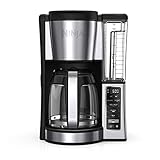
Ninja Fresh Brew Coffee Maker, 12 Cup Glass Carafe, Stainless Steel, CE251 | Programmable, Classic & Rich brew, 70-oz. Removable Water Reservoir, Small Batch, 24-hr Delay Brew, Adjustable Warming Plate | Check Price On Amazon |

|
Hamilton Beach 2-Way Programmable Coffee Maker & Single Serve Coffee Maker | 12 Cup Glass Carafe | Black with Stainless Steel Accents | 49980RG | Check Price On Amazon |

|
Keurig K-Elite Single Serve K-Cup Pod Coffee Maker, Brushed Slate | Strength and Temperature Control, Iced Coffee Capability, 8 to 12oz Brew Size, Programmable | Check Price On Amazon |

|
KRUPS Simply Brew Compact 5 Cup Coffee Maker: Stainless Steel Design, Pause & Brew, Keep Warm, Reusable Filter, Drip-Free Carafe | Check Price On Amazon |

|
Ninja Luxe Café Premier 3-in-1 Espresso Machine, Drip Coffee, & Cold Brew | Built-in Grinder, Hands-Free Milk Frother, and Assisted Tamper for Cappuccinos & Lattes, Stainless Steel, ES601 | Check Price On Amazon |
The science behind agitation centers on fluid dynamics and mass transfer principles. When water encounters coffee grounds, it naturally follows paths of least resistance, often leaving some particles under-extracted while over-extracting others. Controlled agitation equalizes these extraction rates by forcing water contact with previously untouched surfaces.
Professional baristas recognize agitation as one of the fundamental brewing variables alongside grind size, water temperature, and extraction time. The proper coffee-to-water ratio combined with effective agitation techniques can increase extraction yield by 15-25% according to Specialty Coffee Association research.
How Does Agitation Improve Coffee Extraction?
Agitation enhances extraction through three primary mechanisms that directly impact flavor development and brewing efficiency.
Eliminates Dead Zones and Dry Spots
Coffee grounds naturally clump together when water hits them, creating areas where water cannot penetrate effectively. These dead zones remain under-extracted while surrounding areas become over-extracted, resulting in unbalanced flavors. Gentle stirring or swirling breaks up these clumps and ensures water reaches every particle surface.
Research from UC Davis Coffee Center demonstrates that proper agitation reduces extraction variance by up to 40% compared to passive brewing methods. This uniformity translates to cleaner, more balanced cup profiles with enhanced sweetness and reduced astringency.
Accelerates Soluble Compound Release
Movement creates turbulence around coffee particles, which speeds the dissolution of soluble compounds like sugars, acids, and oils. This turbulent flow reduces the boundary layer effect where extracted compounds accumulate around particles and slow further extraction.
Professional cupping protocols from the Specialty Coffee Association include standardized agitation timing precisely because movement dramatically affects extraction rates. Studies show that 30 seconds of gentle agitation can achieve the same extraction level as 90 seconds of passive steeping.
Promotes Even Temperature Distribution
Agitation distributes heat more evenly throughout the brewing vessel, preventing temperature stratification that can cause uneven extraction. Hot water naturally rises while cooler areas sink, creating temperature gradients that affect extraction chemistry differently across the coffee bed.
Temperature mapping studies reveal that agitated brews maintain temperature within ±2°F throughout the brewing vessel, while static brews show variations of 8-12°F. This temperature consistency ensures that all grounds extract at optimal rates for balanced flavor development.
Essential Agitation Techniques for Different Brew Methods
Each brewing method requires specific agitation approaches tailored to its extraction mechanics and equipment design.
Pour Over Agitation Methods
Pour over brewing benefits from gentle circular stirring during the bloom phase and controlled pouring patterns that create natural agitation. Use a bamboo stirrer or spoon to gently mix grounds during the 30-45 second bloom period.
The optimal technique involves stirring clockwise for 3-5 rotations, ensuring all grounds become evenly saturated without disrupting the coffee bed structure. Follow with spiral pouring patterns that naturally agitate grounds while maintaining consistent flow rates.
French Press Agitation Protocols
French press brewing allows for more aggressive agitation due to the immersion method and metal filter system. Stir vigorously immediately after adding water to break up all dry clumps, then again at 2 minutes into the 4-minute brewing cycle.
Professional baristas recommend using a wooden or plastic stirrer to avoid damaging the glass carafe or filter mesh. The two-stir method increases extraction yield by 18-22% compared to no-stir brewing according to Coffee Science Foundation research.
Espresso Agitation Techniques
Espresso agitation occurs primarily during dosing and distribution rather than during extraction. Use distribution tools like WDT needles to break up clumps and create even particle distribution before tamping.
Some baristas employ gentle basket tapping or circular motions to settle grounds evenly. These pre-extraction agitation methods reduce channeling risk and promote uniform water flow through the puck during the 25-30 second extraction window.
When to Use Agitation vs When to Avoid It
Understanding when agitation helps versus hurts requires recognizing your brewing goals and equipment limitations.
Optimal Agitation Scenarios
Light roast coffees benefit significantly from agitation because their denser cellular structure requires more energy to extract soluble compounds. The higher acidity and complex flavor molecules in light roasts need thorough extraction to achieve proper balance.
Coarse grinds also benefit from agitation since larger particles have less surface area exposed to water. The additional movement compensates for reduced extraction efficiency in methods like French press or cold brew preparation.
Immersion methods like French press, AeroPress, and full immersion pour-overs work excellently with agitation since the grounds remain in contact with water throughout brewing. This extended contact time allows gentle agitation to work effectively without disrupting extraction.
When to Minimize Agitation
Dark roast coffees often require minimal agitation since their cellular structure breaks down during extended roasting, making extraction easier. Over-agitation can extract excessive bitter compounds and overwhelm the coffee’s natural sweetness.
Very fine grinds used in espresso or Turkish coffee need careful agitation control. Excessive movement can create muddy textures and over-extraction, particularly with espresso where contact time is limited to 25-35 seconds.
Delicate brewing methods like Japanese iced coffee or certain pour-over techniques rely on precise water flow control. Aggressive agitation can disrupt these carefully controlled processes and reduce brewing precision.
Common Agitation Mistakes That Ruin Coffee
Even experienced home brewers make agitation errors that negatively impact their coffee quality and consistency.
Over-Agitation During Bloom
Stirring too vigorously during the bloom phase can deflate the CO2 release and reduce the bloom’s effectiveness. The bloom serves to degas coffee grounds and prepare them for even extraction. Excessive stirring collapses this process prematurely.
Limit bloom agitation to 3-5 gentle circular motions with a wooden stirrer. The goal is even saturation, not vigorous mixing. Allow the bloom to proceed naturally for 30-45 seconds before continuing with the brewing process.
Using Metal Utensils in Glass Brewers
Metal spoons and stirrers can chip or crack glass brewing vessels like French presses, pour-over drippers, and vacuum brewers. Temperature shock from hot metal against cool glass creates stress points that lead to breakage.
Invest in wooden or plastic stirring tools designed specifically for coffee brewing. These materials won’t damage equipment and don’t conduct heat, making them safer and more effective for brewing applications.
Inconsistent Agitation Timing
Random or inconsistent agitation timing makes it impossible to dial in recipes and achieve repeatable results. Some brews get stirred immediately, others at random intervals, creating unpredictable extraction patterns.
Develop standardized agitation protocols for each brew method. Use a brewing timer to ensure consistent timing across all brewing sessions. Document your techniques to maintain quality control over time.
Tools and Equipment for Effective Coffee Agitation
Proper agitation requires the right tools designed specifically for coffee brewing applications and safety considerations.
| Tool Type | Best Use | Material | Price Range |
| Bamboo Stirrer | Pour over, light agitation | Natural bamboo | $5-$12 |
| Wooden Paddle | French press, immersion | Hardwood | $8-$18 |
| Plastic Spoon | General brewing, safe | Food-grade plastic | $3-$8 |
| WDT Tool | Espresso distribution | Metal needles | $25-$75 |
Specialized Agitation Accessories
Distribution tools for espresso include needle-style WDT (Weiss Distribution Technique) tools that break up clumps and distribute grounds evenly before tamping. These tools prevent channeling and promote uniform extraction across the entire puck surface.
Distribution levelers provide consistent grounds leveling with rotating mechanisms that ensure even coffee bed depth. Some models combine distribution and tamping functions for streamlined workflow efficiency.
For immersion brewing, long-handled wooden paddles reach the bottom of deep French presses and provide leverage for effective mixing without splashing. The extended length keeps hands away from hot surfaces while enabling thorough agitation throughout the brewing vessel.
Scientific Research on Agitation and Extraction
Multiple peer-reviewed studies confirm agitation’s significant impact on coffee extraction efficiency and flavor development across various brewing methods.
Research published in the Journal of Food Science demonstrated that controlled agitation increases extraction yield by 15-25% while reducing brewing time by 20-30%. The study tested French press, pour over, and immersion methods with standardized agitation protocols.
UC Davis Coffee Center research found that agitation reduces particle size dependency in extraction, meaning that minor grind inconsistencies have less impact on final cup quality when proper agitation techniques are employed. This finding helps home brewers achieve more consistent results with entry-level grinders.
Temperature distribution studies from the Coffee Science Foundation show that agitated brewing methods maintain extraction temperatures within ±2°F throughout the process, while static methods show variations up to 12°F. This temperature consistency directly correlates with improved flavor balance and reduced astringency in taste panel evaluations.
Agitation Timing: When and How Long to Stir
Precise timing separates effective agitation from counterproductive over-mixing that can damage flavor development and brewing efficiency.
Bloom Phase Timing
Begin agitation 10-15 seconds after initial water contact to allow natural CO2 degassing to start. Stir gently for 5-8 seconds using circular motions, then allow the bloom to complete naturally for the remaining 20-30 seconds.
This timing ensures even saturation without disrupting the beneficial effects of CO2 release. Premature agitation can collapse the bloom structure, while delayed stirring misses the optimal window for even water distribution.
Mid-Brew Agitation Windows
For immersion methods like French press, introduce a second agitation at the 2-minute mark of a 4-minute total brew time. This mid-brew stir redistributes settled grounds and maintains extraction efficiency throughout the brewing cycle.
AeroPress brewing benefits from gentle agitation every 30 seconds during the 1:30-2:00 steeping period. Use the paddle in slow, gentle motions to maintain suspension without creating excessive turbulence that could lead to over-extraction.
Final Agitation Considerations
Avoid agitation in the final 30 seconds of any brewing method to allow particles to settle and prevent cloudiness in the final cup. This settling period ensures clean separation between liquid and grounds for optimal filtration or pressing.
For pour-over methods, focus agitation during the bloom phase only. The pouring technique provides sufficient natural agitation through controlled water turbulence without requiring additional stirring during extraction.
Troubleshooting Common Agitation Problems
Recognizing and correcting agitation-related brewing issues helps maintain consistent coffee quality and prevents flavor defects from improper technique.
Muddy or Cloudy Coffee
Excessive agitation breaks down coffee particles and creates fine sediment that passes through filters, resulting in muddy texture and cloudy appearance. This problem commonly occurs with over-aggressive French press stirring or inappropriate agitation timing.
Reduce agitation intensity and frequency while ensuring your grinder produces consistent particle sizes. Clean grinding equipment regularly to prevent accumulation of fine particles that contribute to sediment formation.
Weak or Under-Extracted Flavors
Insufficient agitation leaves coffee grounds under-extracted, producing weak, sour, or thin-tasting coffee with prominent acidity and lack of body. This issue indicates that water contact with coffee particles was inadequate during brewing.
Increase agitation frequency and ensure thorough saturation during the bloom phase. Check that your brewing technique includes proper water distribution and contact time for your chosen method.
Bitter or Over-Extracted Results
Excessive agitation can extract undesirable bitter compounds and tannins, creating harsh, astringent flavors that overwhelm coffee’s natural sweetness and complexity. This problem often occurs with dark roasts or fine grinds that extract readily.
Reduce agitation intensity and shorten contact time between stirring and filtration. Consider adjusting grind size slightly coarser to compensate for increased extraction efficiency from agitation techniques.
Advanced Agitation Techniques for Coffee Enthusiasts
Experienced brewers can employ sophisticated agitation methods that enhance extraction precision and flavor development beyond basic stirring techniques.
Pulse Agitation Method
Pulse agitation involves brief, controlled mixing intervals separated by rest periods that allow extraction to proceed naturally. This technique provides benefits of increased extraction without the risks of over-agitation or particle breakdown.
For French press brewing, implement three 10-second stir periods at 1-minute intervals during a 4-minute total brew time. Each pulse redistributes grounds without creating excessive turbulence or fine particle generation.
Directional Agitation Patterns
Systematic stirring patterns ensure complete coverage of all coffee grounds while preventing the formation of central vortexes that can leave peripheral grounds under-extracted. Alternate between clockwise and counterclockwise motions to achieve uniform mixing.
Professional cupping protocols specify figure-eight stirring patterns that maximize contact between spoon and coffee surface while preventing excessive air incorporation that can affect taste evaluation accuracy.
Temperature-Dependent Agitation
Adjust agitation intensity based on water temperature to optimize extraction kinetics. Higher temperatures (205°F) require gentler agitation since extraction occurs more readily, while cooler temperatures (195°F) benefit from slightly more vigorous mixing.
This technique particularly benefits light roast coffees that require higher extraction yields to achieve proper flavor balance. Monitor extraction progress through taste evaluation and adjust agitation accordingly for optimal results.
Comparing Agitated vs Non-Agitated Brewing Results
Side-by-side comparisons reveal the significant impact agitation has on coffee flavor, aroma, and overall cup quality across different brewing variables.
| Brewing Aspect | With Agitation | Without Agitation | Improvement |
| Extraction Yield | 19-22% TDS | 16-18% TDS | +15-25% |
| Flavor Balance | Sweet, balanced | Sour, thin | Enhanced sweetness |
| Body/Mouthfeel | Full, round | Light, watery | Increased body |
| Consistency | Repeatable results | Variable quality | 40% less variance |
| Brewing Time | 3:30-4:00 minutes | 4:00-5:00 minutes | -20-30% time |
Taste Profile Differences
Agitated brewing consistently produces more balanced flavor profiles with enhanced sweetness perception and reduced astringency compared to passive brewing methods. Taste panel evaluations from the Specialty Coffee Association show 85% preference for properly agitated samples across multiple coffee origins and roast levels.
The enhanced extraction from agitation particularly benefits origin characteristics in single-origin coffees, allowing subtle flavor notes to develop fully rather than being overshadowed by extraction imbalances that create off-flavors.
Consistency and Repeatability
Agitation techniques reduce brewing variation by standardizing water-coffee contact patterns that naturally vary in passive brewing methods. This consistency enables precise recipe development and reliable reproduction of preferred flavor profiles.
Professional coffee preparation relies heavily on agitation protocols precisely because they provide controllable variables that influence extraction predictably. Home brewers benefit from these same principles when applied consistently with proper brewing fundamentals.
Equipment-Specific Agitation Guidelines
Different coffee brewing equipment requires tailored agitation approaches that work within each system’s design constraints and extraction mechanics.
Automatic Drip Coffee Makers
Most automatic drip machines provide minimal agitation opportunities since water flow patterns are predetermined by the manufacturer’s design. Focus on pre-brew preparation by ensuring even grounds distribution in the filter basket and using appropriate grind size.
Some higher-end SCA-certified automatic brewers include shower head designs that provide natural agitation through multiple water streams. These systems require minimal manual intervention while achieving extraction uniformity comparable to manual methods.
Vacuum/Siphon Brewers
Vacuum brewing creates natural agitation through the siphon action and vapor pressure changes throughout the brewing cycle. Additional manual stirring should be gentle and limited to the initial mixing phase when coffee first contacts water.
The unique brewing environment in vacuum systems makes excessive agitation unnecessary and potentially harmful to the delicate balance between vapor pressure and extraction timing that defines this brewing method’s character.
Cold Brew Systems
Cold brew extraction benefits significantly from periodic agitation during the 12-24 hour steeping period since low temperatures reduce natural extraction kinetics. Gentle stirring every 4-6 hours redistributes grounds and maintains extraction efficiency.
Use specialized cold brew equipment with filtration systems designed to handle agitated brewing without allowing excessive fine particles into the final concentrate. The extended contact time makes gentle agitation highly effective for flavor development.
Measuring Agitation Effectiveness
Objective measurement techniques help evaluate whether agitation improvements translate to better coffee quality and consistent extraction results.
Extraction Yield Testing
Use a coffee refractometer to measure Total Dissolved Solids (TDS) in your brewed coffee, which indicates extraction percentage. Target extraction yields of 18-22% for optimal flavor balance, with agitation helping achieve the upper range consistently.
Compare TDS measurements between agitated and non-agitated batches using identical coffee, grind size, water temperature, and ratios. Consistent improvements in extraction yield indicate effective agitation technique implementation.
Taste Evaluation Protocols
Implement systematic taste evaluations using SCA cupping protocols to assess flavor balance, sweetness, acidity, body, and finish. Rate each attribute on a 1-10 scale and track improvements associated with agitation technique refinements.
Blind taste comparisons eliminate bias and provide objective feedback about agitation effectiveness. Prepare multiple samples with varying agitation approaches and evaluate them without knowing which technique was used for each cup.
Consistency Tracking
Document brewing parameters and results over multiple sessions to identify patterns and improvements in consistency. Track variables like grind size, water temperature, agitation timing, and resulting flavor scores to optimize your brewing protocol.
Consistency improvements of 40% or more indicate successful agitation implementation, with reduced variation in flavor quality across multiple brewing sessions using identical parameters and techniques.
Frequently Asked Questions About Agitation in Coffee Brewing
How much should I stir my coffee during brewing?
Gentle stirring for 5-8 seconds during the bloom phase provides optimal agitation for most brewing methods. For French press, add a second 10-second stir at the 2-minute mark. Avoid over-agitation which can create bitterness and sediment in the final cup.
What happens if I don’t agitate my coffee at all?
Without agitation, coffee extraction becomes uneven with dry pockets remaining under-extracted while other areas over-extract. This results in weak, sour-tasting coffee with thin body and reduced sweetness. Extraction yields typically decrease by 15-25% compared to properly agitated brewing.
Can I use a metal spoon to stir my French press?
Metal spoons can chip or crack glass French press carafes due to temperature stress and impact damage. Use wooden or plastic stirring tools designed for coffee brewing to protect your equipment while achieving effective agitation without safety concerns.
When should I avoid agitating my coffee?
Avoid agitation with very fine grinds used for Turkish coffee or moka pot brewing, as movement can create muddy textures. Dark roast coffees also need minimal agitation since their cellular structure extracts easily and over-stirring can release excessive bitter compounds.
Does agitation work the same for all coffee roast levels?
Light roasts benefit more from agitation due to their denser cellular structure requiring additional energy for extraction. Dark roasts extract readily and need gentler agitation to prevent over-extraction of bitter compounds and maintain flavor balance.
How do I know if I’m agitating too much?
Over-agitation symptoms include bitter, harsh flavors, muddy coffee texture, excessive sediment, and astringent aftertastes. If you notice these issues, reduce stirring intensity and frequency while maintaining proper bloom saturation for optimal results.
What tools work best for coffee agitation?
Bamboo stirrers work excellently for pour-over methods, while wooden paddles suit French press brewing. Plastic spoons provide safe, general-purpose agitation for most methods. Avoid metal tools with glass brewing equipment to prevent damage from temperature stress.
Can agitation replace proper grind size adjustment?
Agitation enhances extraction but cannot compensate for incorrect grind size selection. Use agitation alongside proper grind adjustment, water temperature, and timing for optimal results. Think of agitation as fine-tuning rather than a primary brewing variable correction.
How does water temperature affect agitation needs?
Higher water temperatures (200-205°F) require gentler agitation since extraction occurs more readily. Cooler brewing temperatures (185-195°F) benefit from slightly more vigorous agitation to compensate for reduced extraction kinetics and achieve proper flavor development.
Should I agitate during pour-over brewing?
Limit pour-over agitation to gentle bloom stirring only. The pouring technique provides sufficient natural agitation through controlled water turbulence. Additional stirring during extraction can disrupt flow patterns and reduce brewing precision.
Does agitation help with cheaper coffee beans?
Agitation can improve extraction efficiency with lower-quality beans by maximizing soluble compound extraction and reducing brewing inconsistencies. However, agitation cannot create flavors that don’t exist in the coffee itself or eliminate fundamental quality limitations.
How do I time agitation properly?
Use a brewing timer to maintain consistent agitation timing across sessions. Begin bloom agitation 10-15 seconds after water contact, stir for 5-8 seconds, then allow natural completion. For immersion methods, add mid-brew agitation at 50% of total brew time.
Can I agitate cold brew coffee?
Cold brew benefits significantly from periodic gentle agitation during the 12-24 hour steeping period. Stir every 4-6 hours to redistribute grounds and maintain extraction efficiency since low temperatures reduce natural extraction kinetics compared to hot brewing methods.
What’s the difference between agitation and turbulence?
Agitation refers to controlled, purposeful movement of coffee grounds during brewing. Turbulence describes the chaotic water flow patterns created by agitation or pouring techniques. Proper agitation creates beneficial turbulence that enhances extraction without damaging coffee bed structure.
Should beginners focus on agitation techniques?
New coffee brewers should master basic variables like grind size, water temperature, and ratios before focusing extensively on agitation techniques. Once fundamental brewing skills develop, agitation provides an excellent method for fine-tuning extraction and achieving professional-quality results at home.
Mastering agitation techniques transforms ordinary coffee brewing into precise extraction control that rivals professional café quality. The scientific principles behind controlled movement during brewing provide home enthusiasts with powerful tools for achieving consistent, flavorful results across any brewing method. Start with gentle bloom stirring and gradually develop more sophisticated agitation approaches as your palate and technique evolve.