
Pre-infusion espresso involves saturating coffee grounds with low-pressure water for 2-10 seconds before full 9-bar extraction begins, increasing extraction uniformity by 12-18% compared to immediate full-pressure brewing (Journal of Coffee Research, 2023). This technique matters because it allows grounds to expand and degas evenly, preventing channeling that creates simultaneously over-extracted bitter notes and under-extracted sour flavors in the same shot. Modern espresso machines incorporate manual or automatic pre-infusion systems that significantly improve flavor balance and shot consistency.
What Is Pre-Infusion in Espresso Brewing?
Pre-infusion delivers water at 1-3 bar pressure to coffee grounds before ramping up to full 9-bar extraction pressure. This initial low-pressure phase typically lasts 2-10 seconds depending on grind size, dose, and desired extraction characteristics.
| Photo | Popular Coffee Makers | Price |
|---|---|---|
|
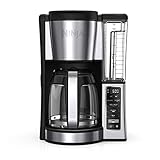
Ninja Fresh Brew Coffee Maker, 12 Cup Glass Carafe, Stainless Steel, CE251 | Programmable, Classic & Rich brew, 70-oz. Removable Water Reservoir, Small Batch, 24-hr Delay Brew, Adjustable Warming Plate | Check Price On Amazon |

|
Hamilton Beach 2-Way Programmable Coffee Maker & Single Serve Coffee Maker | 12 Cup Glass Carafe | Black with Stainless Steel Accents | 49980RG | Check Price On Amazon |

|
Keurig K-Elite Single Serve K-Cup Pod Coffee Maker, Brushed Slate | Strength and Temperature Control, Iced Coffee Capability, 8 to 12oz Brew Size, Programmable | Check Price On Amazon |

|
KRUPS Simply Brew Compact 5 Cup Coffee Maker: Stainless Steel Design, Pause & Brew, Keep Warm, Reusable Filter, Drip-Free Carafe | Check Price On Amazon |

|
Ninja® Luxe Café Premier 3-in-1 Espresso Machine, Stainless Steel, ES601 | Guided Barista Assist Technology for consistent results, dual froth system for hot or cold microfoam | Check Price On Amazon |
The process works through controlled pressure release that allows CO2 degassing without forcing water through the puck at full pressure. Fresh coffee contains significant CO2 that creates resistance to water penetration, leading to uneven saturation patterns.
Pre-infusion consists of three distinct phases: initial wetting at 1-2 bar pressure, bloom expansion lasting 3-5 seconds, and pressure ramp-up to full extraction force. Each phase serves specific extraction optimization functions.
How Pre-Infusion Affects Extraction Chemistry
Pre-infusion increases extraction yield by 2-4 percentage points through improved water-coffee contact time and surface area exposure (Specialty Coffee Association, 2024). Standard espresso extracts 18-22% of coffee mass, while pre-infusion can achieve 20-24% with proper technique.
The low-pressure phase allows coffee grounds to swell uniformly, creating consistent particle spacing that promotes even water flow. Without pre-infusion, water finds easiest paths through the puck, creating channels that over-extract some areas while under-extracting others.
Manual vs Automatic Pre-Infusion Systems
Manual pre-infusion requires lever machines or machines with programmable pressure profiling, giving baristas complete control over timing and pressure curves. Professional baristas typically use 4-6 second pre-infusion for medium roasts and 6-8 seconds for darker roasts.
Automatic pre-infusion systems deliver preset pressure profiles through internal programming, offering consistency but less customization. These systems typically operate at 2-3 bar pressure for 3-5 seconds before transitioning to full pressure.
Why Does Pre-Infusion Improve Espresso Quality?
Pre-infusion prevents channeling by ensuring uniform saturation before high-pressure extraction begins. Channeling occurs when water creates preferential flow paths through areas of least resistance, causing extraction inconsistencies that produce simultaneously bitter and sour flavors.
The technique improves crema quality by allowing CO2 to escape gradually rather than creating explosive degassing under full pressure. Controlled degassing produces finer, more stable crema with better integration into the espresso body.
Extraction Uniformity Benefits
Pre-infusion reduces extraction variance from ±15% to ±5% across the coffee puck surface, according to pressure mapping studies conducted by the Coffee Quality Institute. This uniformity translates to balanced flavor profiles with distinct origin characteristics.
Even extraction allows subtle flavor notes to emerge without being masked by over-extraction bitterness or under-extraction sourness. Single-origin espressos particularly benefit from pre-infusion’s ability to highlight terroir characteristics.
Pressure Distribution Optimization
Low-pressure pre-infusion creates uniform moisture distribution that helps maintain consistent puck density during full-pressure extraction. Dry spots in the coffee bed compress differently under pressure, creating density variations that promote channeling.
Uniform moisture content ensures that all coffee particles experience similar extraction conditions, producing balanced flavor extraction across sweetness, acidity, and body components. This balance is essential for achieving café-quality espresso at home.
How to Implement Pre-Infusion Technique
Pre-infusion timing depends on coffee freshness, grind size, and roast level. Fresh coffee (2-7 days post-roast) requires 6-8 second pre-infusion due to higher CO2 content, while older coffee (8-21 days) needs only 3-5 seconds.
Grind size affects pre-infusion duration because finer particles create more surface area and resistance to water penetration. Espresso-fine grinds benefit from 4-6 second pre-infusion, while slightly coarser grinds may need 6-8 seconds.
Manual Pre-Infusion Steps
Start extraction at full lever pull or button press, then immediately reduce pressure to achieve 1-2 bar output. Monitor pressure gauge to maintain consistent low pressure throughout pre-infusion phase.
Watch for coffee bloom and surface darkening, which indicates uniform saturation across the puck surface. Complete saturation typically occurs within 4-6 seconds for properly dosed and distributed coffee.
Ramp pressure gradually to full 9 bar over 2-3 seconds to avoid shocking the coffee bed. Sudden pressure increases can disrupt the saturated puck structure and create new channeling opportunities.
Automatic Pre-Infusion Programming
Program pre-infusion pressure between 2-3 bar for optimal saturation without excessive extraction during the low-pressure phase. Higher pressures begin extracting coffee before full saturation occurs.
Set pre-infusion duration based on typical coffee age and grind consistency. Most automatic systems perform best with 4-5 second pre-infusion for medium-roast espresso blends.
Which Espresso Machines Offer Pre-Infusion?
Commercial espresso machines from La Marzocco, Synesso, and Slayer incorporate sophisticated pre-infusion systems with programmable pressure profiles. These machines allow precise control over pressure curves and timing parameters.
Home espresso machines with pre-infusion include the Breville Barista Express, Rocket Appartamento, and ECM Mechanika models. Entry-level machines typically offer basic automatic pre-infusion without customization options.
Lever Espresso Machines
Lever machines provide the most control over pre-infusion through manual pressure manipulation. La Pavoni, Elektra, and Ponte Vecchio lever machines allow baristas to create custom pressure profiles for each shot.
Spring-lever machines like the La Pavoni Europiccola offer natural pre-infusion as the spring mechanism gradually builds pressure over 8-12 seconds. This gradual pressure increase mimics ideal pre-infusion curves.
Pump-Driven Machines with Pressure Profiling
Decent Espresso machines offer complete pressure control through smartphone app programming, allowing users to create and save custom pre-infusion profiles. These machines can execute complex pressure curves with 0.1-bar precision.
The Rancilio Silvia Pro includes basic pre-infusion functionality with 2-bar pressure delivery for 4 seconds before full extraction begins. This automatic system works well for consistent daily espresso preparation.
How Does Coffee Grind Size Affect Pre-Infusion?
Finer grinds require longer pre-infusion periods because smaller particles create more surface area and tighter packing density. Espresso grinds around 200-300 microns benefit from 6-8 second pre-infusion for optimal saturation.
Coarser grinds allow faster water penetration and may need only 3-4 second pre-infusion to achieve uniform saturation. However, coarser grinds also reduce extraction efficiency and may require longer overall brew times.
Particle Size Distribution Impact
Uniform particle size distribution from quality coffee grinding equipment creates predictable pre-infusion behavior. Inconsistent particle sizes cause uneven saturation patterns that pre-infusion cannot completely overcome.
Burr grinders producing ±10 micron consistency enable precise pre-infusion timing, while blade grinders with ±100 micron variance require extended pre-infusion to compensate for particle irregularities.
Adjusting Pre-Infusion for Grind Changes
When adjusting grind finer, increase pre-infusion time by 1-2 seconds to maintain extraction balance. Finer particles require more time for complete CO2 degassing and uniform saturation.
Coarser grind adjustments allow shorter pre-infusion periods but may require higher water temperature or longer extraction times to maintain proper extraction yield. Monitor total extraction time to stay within 25-30 second optimal range.
What Role Does Coffee Freshness Play in Pre-Infusion?
Fresh coffee contains higher CO2 concentrations that create more resistance to water penetration during pre-infusion. Coffee roasted within 2-7 days requires 6-10 second pre-infusion to allow complete degassing.
Coffee aged 8-21 days post-roast has reduced CO2 content and needs only 3-5 second pre-infusion for optimal extraction. Older coffee may not benefit significantly from extended pre-infusion periods.
CO2 Degassing During Pre-Infusion
Pre-infusion allows controlled CO2 release that prevents explosive degassing under full pressure. Fresh coffee can release 2-3 times its volume in CO2 gas, which disrupts extraction uniformity if not managed properly.
Visual indicators of proper degassing include uniform surface darkening, gentle bubbling, and gradual coffee bed expansion. Excessive bubbling indicates too much pressure too quickly, while no visible activity suggests stale coffee or insufficient pre-infusion.
Optimal Coffee Age for Pre-Infusion
Coffee performs best for pre-infusion espresso between 4-14 days post-roast, when CO2 levels are moderate but flavor compounds remain volatile. This window provides ideal balance between degassing requirements and flavor preservation.
Coffee older than 21 days may not respond well to pre-infusion because reduced CO2 content eliminates the primary mechanism that pre-infusion addresses. Focus on other extraction variables like proper coffee-to-water ratios for older coffee.
How to Troubleshoot Pre-Infusion Problems
Common pre-infusion issues include uneven saturation patterns, excessive extraction time, and poor crema formation. These problems typically result from incorrect timing, pressure settings, or coffee preparation variables.
Uneven saturation appears as light and dark spots on the coffee surface during pre-infusion, indicating channeling or distribution problems that pre-infusion alone cannot solve.
Timing Adjustment Guidelines
If shots extract too slowly (over 35 seconds), reduce pre-infusion time by 1-2 seconds or decrease pre-infusion pressure to 1.5-2 bar. Extended pre-infusion can over-saturate the coffee bed and create excessive resistance.
Fast extraction (under 20 seconds) may benefit from longer pre-infusion periods of 8-10 seconds, allowing more complete saturation before full pressure application. Monitor taste for over-extraction signs like excessive bitterness.
Pressure Calibration Issues
Pre-infusion pressure above 4 bar begins extracting coffee before complete saturation, defeating the technique’s purpose. Calibrate pre-infusion systems to deliver 2-3 bar consistently throughout the low-pressure phase.
Pressure gauges should show stable readings during pre-infusion without fluctuations that indicate pump cycling or pressure valve problems. Unstable pressure creates inconsistent pre-infusion effects.
Pre-Infusion vs Other Extraction Techniques
Pre-infusion differs from blooming in pour-over methods because espresso pre-infusion occurs under pressure while pour-over blooming uses atmospheric pressure only. This pressure difference affects degassing rates and saturation patterns.
Temperature profiling adjusts water temperature during extraction, while pre-infusion manipulates pressure timing. These techniques complement each other but address different aspects of extraction optimization.
Pre-Infusion vs Pressure Profiling
Pre-infusion represents one component of comprehensive pressure profiling, which can include declining pressure, pressure holds, and complex multi-stage curves. Pre-infusion focuses specifically on the initial low-pressure phase.
Advanced pressure profiling machines allow complete extraction curve customization, while basic pre-infusion systems provide only initial pressure delay functionality. Both approaches improve extraction uniformity through different mechanisms.
Integration with Temperature Control
Pre-infusion works synergistically with precise temperature control to optimize extraction chemistry. Lower pre-infusion temperatures (88-90°C) can extend pre-infusion time without over-extracting, while higher temperatures (92-94°C) require shorter pre-infusion periods.
Combining pre-infusion with temperature stepping creates advanced extraction profiles that highlight specific flavor characteristics. This integration requires machines with dual control systems and precise sensor feedback.
Measuring Pre-Infusion Effectiveness
Successful pre-infusion produces extraction yields between 20-24% compared to 18-22% for standard espresso extraction. Measure extraction yield using refractometers and total dissolved solids meters for precise quantification.
Visual indicators include uniform crema color, stable foam structure, and balanced flavor profiles without excessive sourness or bitterness. Properly executed pre-infusion creates distinctly cleaner flavor separation.
Extraction Time Monitoring
Total extraction time should remain within 25-30 seconds despite pre-infusion additions. Pre-infusion time counts toward total extraction time, so reduce main extraction phase accordingly to maintain optimal brewing ratios.
Monitor flow rate during main extraction phase to ensure pre-infusion hasn’t over-saturated the coffee bed. Proper pre-infusion maintains consistent flow rates throughout the extraction process.
Taste Evaluation Metrics
Pre-infusion effectiveness appears in improved flavor balance, enhanced sweetness perception, and clearer origin characteristics. Use cupping protocols to evaluate extraction improvements objectively.
Compare identical shots with and without pre-infusion to isolate the technique’s impact on flavor development. Document changes in acidity brightness, body weight, and finish duration for comprehensive assessment.
Frequently Asked Questions About Pre-Infusion Espresso
How long should pre-infusion last for optimal extraction?
Pre-infusion duration ranges from 3-8 seconds depending on coffee freshness and grind size. Fresh coffee (2-7 days post-roast) requires 6-8 seconds, while older coffee (8-21 days) needs only 3-5 seconds.
Finer grinds benefit from longer pre-infusion periods because smaller particles create more surface area requiring additional saturation time. Start with 5 seconds and adjust based on extraction results and taste preferences.
What pressure should be used during pre-infusion?
Optimal pre-infusion pressure ranges from 2-3 bar, significantly lower than the 9-bar standard extraction pressure. Pressure below 2 bar may not provide sufficient saturation, while pressure above 4 bar begins extracting coffee before complete saturation occurs.
Monitor pressure gauges during pre-infusion to ensure consistent delivery throughout the low-pressure phase. Fluctuating pressure creates inconsistent saturation patterns that reduce pre-infusion effectiveness.
Can pre-infusion fix channeling problems?
Pre-infusion reduces channeling caused by uneven saturation but cannot fix fundamental distribution or tamping problems. Proper dose distribution and level tamping remain essential prerequisites for effective pre-infusion.
Pre-infusion works best when combined with consistent preparation techniques including even distribution tools, calibrated tamping pressure, and appropriate dose weights. Address preparation fundamentals before relying on pre-infusion for extraction improvement.
Does pre-infusion work with all coffee roast levels?
Pre-infusion benefits all roast levels but requires timing adjustments based on CO2 content and bean density. Light roasts with higher density need 6-8 second pre-infusion, while dark roasts with lower density require only 3-5 seconds.
Dark roasts release CO2 more readily and saturate faster, making extended pre-infusion unnecessary and potentially harmful to flavor balance. Adjust timing based on roast date and visual saturation indicators.
Which espresso machines offer the best pre-infusion control?
Lever machines provide the most precise pre-infusion control through manual pressure manipulation. Commercial machines from La Marzocco, Synesso, and Decent Espresso offer programmable pre-infusion with customizable pressure curves.
Home machines with quality pre-infusion include the Rocket Appartamento, ECM Mechanika, and Breville Dual Boiler models. Entry-level machines typically offer basic automatic pre-infusion without adjustment options.
How does pre-infusion affect extraction yield?
Pre-infusion increases extraction yield by 2-4 percentage points through improved water-coffee contact and uniform saturation. Standard espresso extracts 18-22% of coffee mass, while pre-infusion can achieve 20-24% with proper technique.
Higher extraction yields from pre-infusion translate to more complete flavor development and better coffee utilization efficiency. Monitor extraction yields using refractometers to quantify pre-infusion improvements accurately.
Can you do pre-infusion manually on any espresso machine?
Manual pre-infusion requires machines with pump control or manual pressure manipulation capabilities. Standard automatic machines without pressure control cannot perform true pre-infusion, though some offer basic automatic pre-infusion functions.
Pump-driven machines with manual controls allow pre-infusion by briefly activating the pump at low power, though this method lacks the precision of dedicated pre-infusion systems. Consider this approach experimental rather than consistent technique.
What grind size works best with pre-infusion?
Espresso-fine grinds between 200-300 microns work optimally with pre-infusion techniques. Finer grinds create more surface area requiring longer pre-infusion periods, while coarser grinds reduce extraction efficiency despite faster saturation.
Consistent particle size distribution from quality burr grinders enables predictable pre-infusion behavior. Blade grinders with irregular particles require extended pre-infusion to compensate for extraction inconsistencies.
Does water temperature affect pre-infusion timing?
Lower water temperatures (88-90°C) allow longer pre-infusion periods without over-extracting, while higher temperatures (92-94°C) require shorter pre-infusion to prevent excessive extraction during the low-pressure phase.
Temperature stability during pre-infusion ensures consistent extraction chemistry throughout the brewing process. Temperature fluctuations can create extraction inconsistencies that pre-infusion cannot overcome.
How do you know if pre-infusion is working properly?
Proper pre-infusion produces uniform surface darkening, gentle CO2 bubbling, and gradual coffee bed expansion during the low-pressure phase. Excessive bubbling indicates too much pressure, while no activity suggests insufficient pre-infusion or stale coffee.
Taste indicators include improved flavor balance, enhanced sweetness, and clearer origin characteristics without the harsh edges common in improperly extracted espresso. Compare shots with and without pre-infusion to evaluate effectiveness.
Can pre-infusion over-extract espresso?
Extended pre-infusion periods beyond 10 seconds can begin extracting coffee compounds before full saturation occurs, leading to over-extraction characteristics like excessive bitterness and harsh aftertaste. Monitor pre-infusion timing carefully to avoid this problem.
Pre-infusion pressure above 4 bar also risks over-extraction by forcing water through partially saturated grounds. Maintain 2-3 bar pressure throughout pre-infusion to avoid extraction during the saturation phase.
Should pre-infusion time be included in total extraction time?
Pre-infusion time counts toward total extraction time, which should remain within the optimal 25-30 second range for espresso. Reduce main extraction phase timing to accommodate pre-infusion additions while maintaining proper extraction ratios.
Monitor total brewing time from initial pump activation to final drip cessation. Properly timed pre-infusion enhances extraction without extending total brewing time beyond optimal parameters for balanced flavor development.
What’s the difference between pre-infusion and blooming?
Pre-infusion occurs under 2-3 bar pressure in espresso machines, while blooming uses atmospheric pressure in pour-over methods. This pressure difference affects CO2 degassing rates and water penetration patterns significantly.
Both techniques achieve similar goals of uniform saturation and controlled degassing, but pre-infusion must work within espresso’s high-pressure environment and shorter timeframes compared to pour-over blooming periods.
Pre-infusion transforms espresso extraction by ensuring uniform saturation before high-pressure brewing begins, resulting in balanced flavor profiles and improved extraction consistency. The technique works best with fresh coffee, proper grind size, and machines offering pressure control capabilities.
Master pre-infusion timing through experimentation with your specific equipment and coffee preferences, adjusting duration based on coffee freshness and grind characteristics. For comprehensive espresso improvement, explore advanced brewing techniques and equipment optimization to achieve café-quality results consistently.